Holmes uses Sir Henry as bait in a trap to arrest Stapleton
The Hound of the BaskervillesSherlock Holmes’s trap for Stapleton makes Sir Henry Baskerville’s ordinary dinner and walk home the centre of a calculated attempt to turn suspicion into evidence. Because Holmes has no case he can yet prove, he arranges for Sir Henry to face Stapleton without protection in sight, while Watson and Inspector Lestrade watch from concealment. The danger is real, but the route, the witnesses, and even the information given to Sir Henry are controlled as closely as Holmes can manage.
Motive and the missing proof
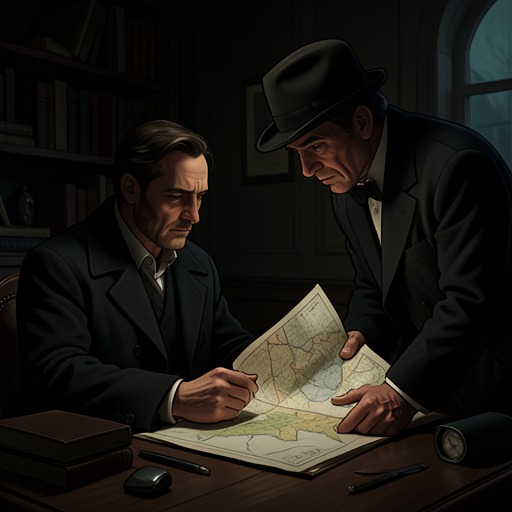
The plan takes shape against a succession worth close to a million pounds. Holmes learns that, if Sir Henry died, the entailed estate would pass to the Desmonds, distant cousins; James Desmond, an elderly clergyman, was also positioned to inherit the money unless Sir Henry made another will. Sir Henry had made none and believed the fortune should remain with the title and property. These arrangements make the succession an unmistakable stake, though they do not by themselves prove who intends to claim it or how.
Later, Holmes identifies a further obstacle in Stapleton’s concealed identity. If Stapleton entered the succession, Holmes reasons, an heir who had lived nearby under another name would invite suspicion and inquiry. Beryl Stapleton had heard her husband consider several ways around that problem: claiming the property from South America after establishing his identity there, appearing in London in disguise, or using an accomplice to present the necessary papers while keeping a claim on part of the income. These possibilities clarify why inheritance matters to the trap, but they remain explanations of Stapleton’s potential scheme, not evidence Holmes already possesses when he sets it.
The immediate evidentiary gap is more pressing. Holmes points out that no direct connection has been established between the hound and Selden’s death: the investigators heard it but never saw it, and cannot prove it followed Selden. Nor have they established a motive. Holmes therefore accepts the risk of proceeding in order to establish a case, hoping Laura Lyons may help once she understands the situation. The trap is not a verdict in advance; it is a means of testing suspicion against observable action.
Sir Henry as bait
Holmes keeps the hound’s part in Selden’s death from Sir Henry. He wants Sir Henry to believe the explanation Stapleton would have him accept, reasoning that the baronet will be steadier for the ordeal ahead. The concealment also preserves the appearance that Sir Henry is acting without knowledge of the surveillance. Watson is told to excuse himself from the planned dinner, leaving Sir Henry to go alone, while Holmes presents his own absence as the result of urgent business in town.
Holmes then gives Sir Henry a specific assignment: drive to Merripit House, send the trap back, and walk home. The route is not left open. Sir Henry must take only the straight path from Merripit House to the Grimpen Road, his natural way back, and no other crossing of the moor. Holmes says he would not ask this of him without confidence in his nerve and courage, but makes clear that following the instruction is essential. Sir Henry agrees, although he admits that the Hall and moor are unpleasant places alone. The exchange sets the plan’s terms: Sir Henry supplies the apparent opportunity, while Holmes tries to constrain the danger and retain the advantage of surprise.
The concealed watch
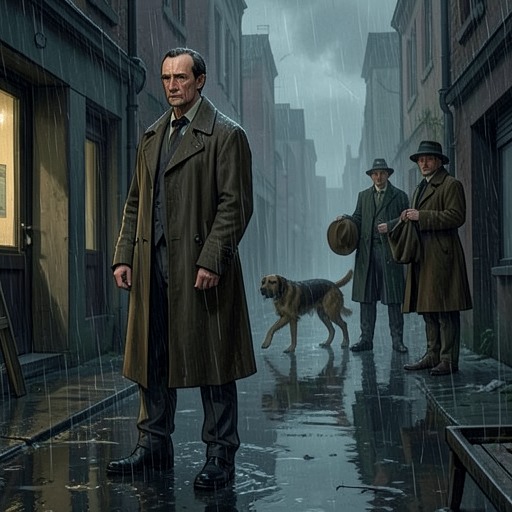
Holmes, Watson, and Inspector Lestrade approach by hired wagonette, keeping their conversation trivial in the driver’s presence despite their anticipation. Near the avenue to Baskerville Hall they get down, dismiss the vehicle to return to Coombe Tracey, and walk towards Merripit House. Inspector Lestrade confirms that he is armed. Holmes insists on quiet, then stops the group about two hundred yards from the house and uses rocks as cover.
From there, Holmes directs Watson to creep closer and see what is happening without alerting the people inside. Watson reaches the low wall around the orchard and looks through an uncurtained window. Sir Henry and Stapleton are the only two men in the dining room, seated opposite one another at a round table, with coffee and wine before them as they smoke. Stapleton speaks animatedly; Sir Henry looks pale and distracted. The scene gives the watchers what the arrangement was designed to provide: the two men together, apparently at ease, while Sir Henry’s coming walk remains ahead of him. It does not yet disclose what will happen on the moor.
Significance and limits
The trap’s defining contrast is between visible calm and concealed danger. A private dinner, an ordinary walk home, and a return along a familiar path become pieces of an investigative operation. Holmes’s instructions seek to make the encounter legible: Sir Henry is isolated, but his route is fixed; the watchers are near, but hidden; and the hound is withheld from Sir Henry’s knowledge so that fear does not disrupt the test.
At this point, however, the operation has not solved the case. Holmes has acknowledged that the evidence connecting the hound to a death is missing, and his hope that Laura Lyons will help remains a hope. The surveillance at Merripit House establishes the setting for the intended ordeal, not its outcome. The action matters because Holmes is trying to move from a compelling theory about danger and inheritance to proof that can withstand scrutiny.